2010–2013: Building Core Networks
How communities reshaped the Fund from the inside out, transforming how decisions were made, which groups got funded, and who had power.
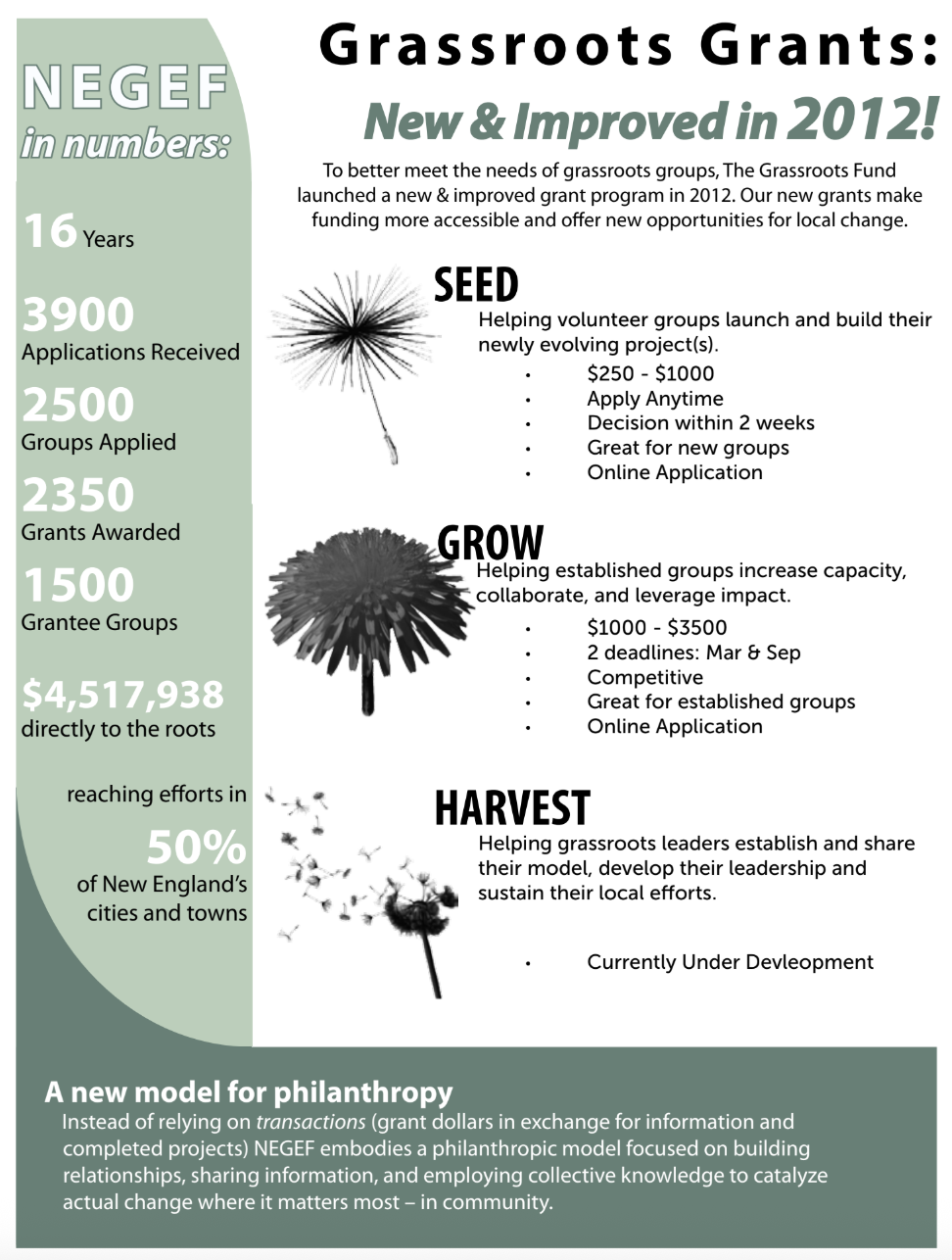
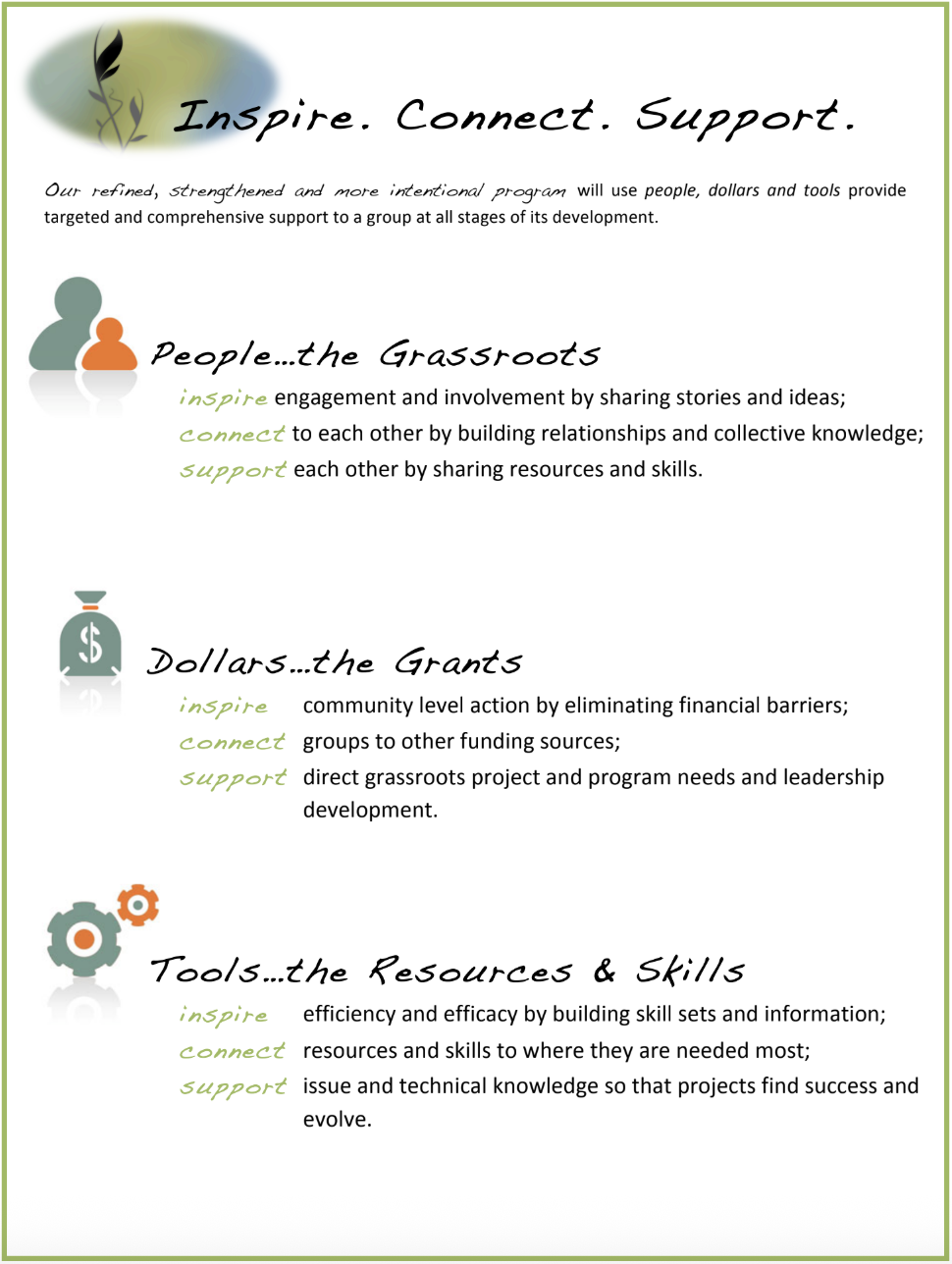
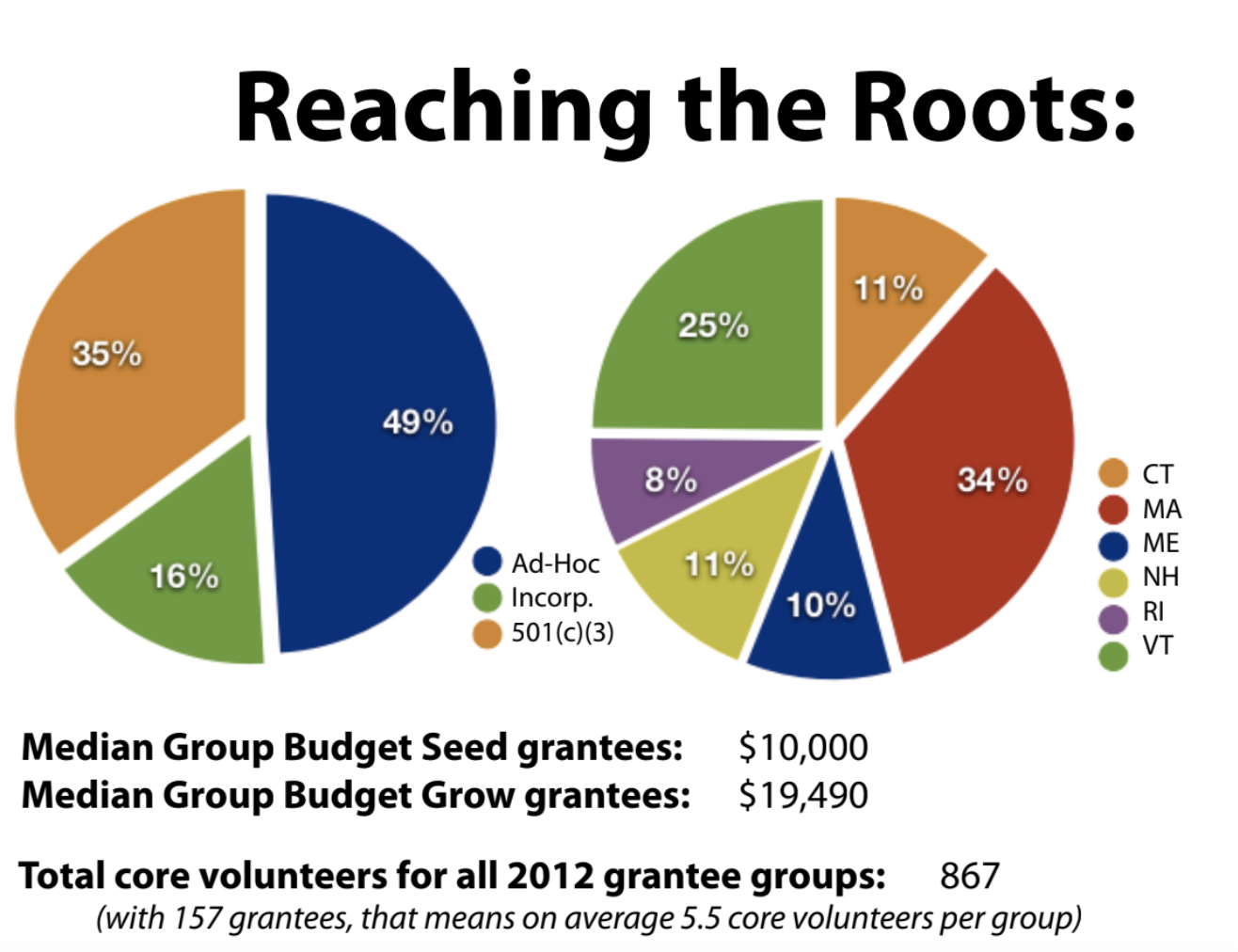
As staff listened and learned from partners, the organization expanded grassroots leadership and participation throughout every part of the organization. The Grassroots Fund introduced new tools and approaches, including an online application system and the Seed & Grow grant programs, making it easier for community groups to apply and providing more responsive support at different stages of their growth. The role of the Grant Making Committee (GMC) was formalized, updating policies so that community members serving on the GMC had the final say on funding decisions.
During this time the organization built participatory learning loops that enabled it to continually adapt based on community input and experience. The staff recognized that the organization was under serving Black, Indigenous, and People of the Global Majority (BIPGM) communities, particularly in southern New England. In response, our staff launched Pop-Up Offices, meeting people where they were, building relationships in-person, and making sure more communities knew about the funding available.
“The biggest lesson I learned is that the best grant programs are informed by the grassroots. The grassroots tell you what the issues are and where the work needs to happen. Every year we'd ask ourselves, "What are the grantees telling us? What do we need to adjust?" We listened, simplified the process, removed barriers, and kept evolving. There wasn't one defining moment that changed the organization. It happened because there was enough flexibility, communication, and trust to keep learning.
Over time, those conversations naturally expanded from traditional environmental work to environmental justice and equity. We kept asking who wasn't at the table and what perspectives were missing.”
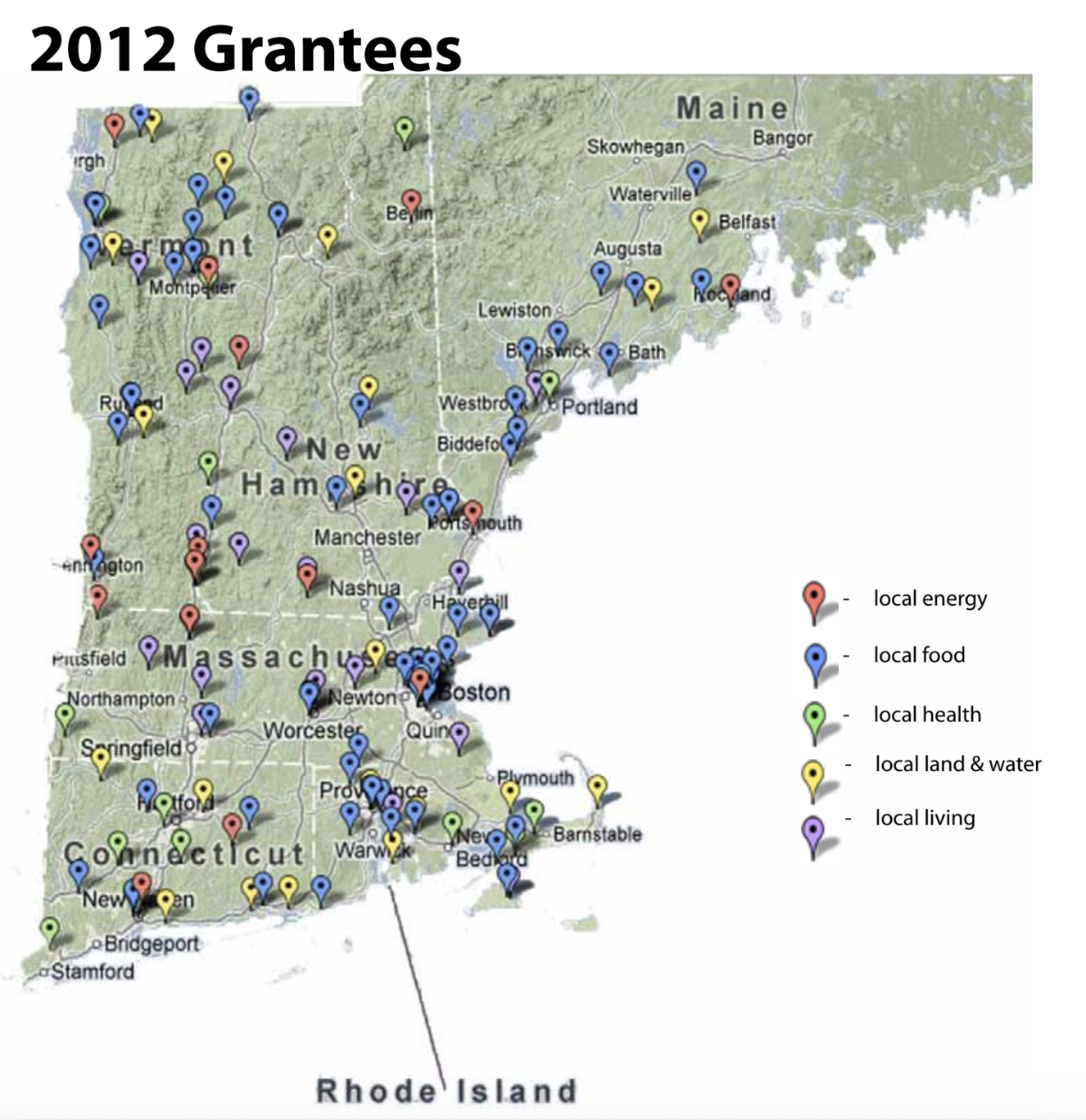
- Dea Brickner-Wood, former Board President and Grant Committee Member“One of the things that always struck me about the Grassroots Fund was that it gave you a window into an entire environmental movement. Reading grant proposals wasn't just about making funding decisions. It was one of the only ways to see what communities across New England were working on, from neighborhood parks and community gardens to immigrant and refugee organizations, to food sovereignty and youth leadership.
You could watch new ideas emerge long before they became part of the mainstream. As new environmental challenges emerged, our understanding of environmental advocacy expanded too. We realized communities were often creating solutions that previous generations hadn't imagined.
I'm completely confident in saying that I think the New England Grassroots Fund has always occupied a space in philanthropy that was unique, and very forward-thinking and forward-acting in a way that others were not. We weren't setting out to reinvent philanthropy. We just kept making the process a little better, a little simpler, a little more accessible. We gave people the benefit of the doubt. We learned to ask better questions about representation, partnerships, and who wasn't yet at the table. Looking back, those small adjustments added up to something much bigger.”
- Vidya Tikku, former Board Member and Grantmaking Committee Member